


Grand Theft Auto: Vice City
3.318.94K Reviews
App Specs
- Version
- 1.12.259
- Updated On
- License
- $4.99
- Downloads
- 1,000,000+
- Developer
- Rockstar Games
- Categories
- Arcade
- Platform
- Android, iOS
Screenshots
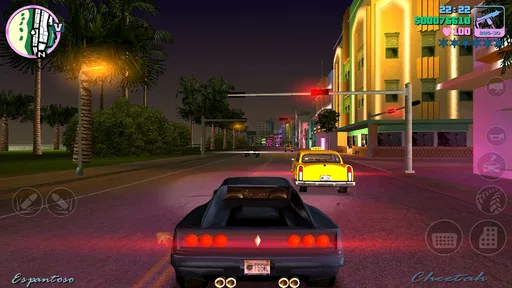
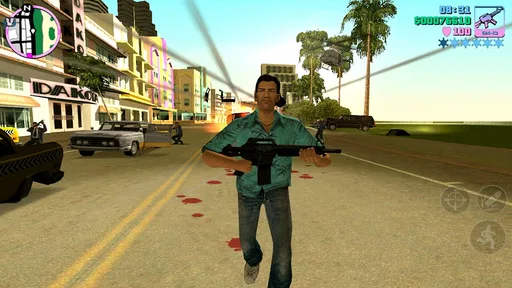
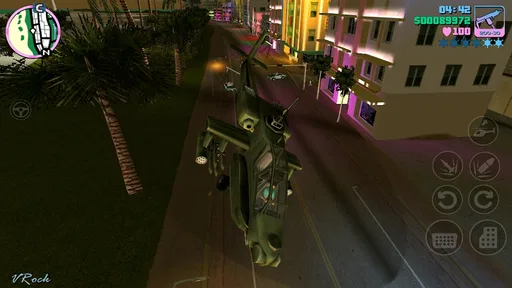
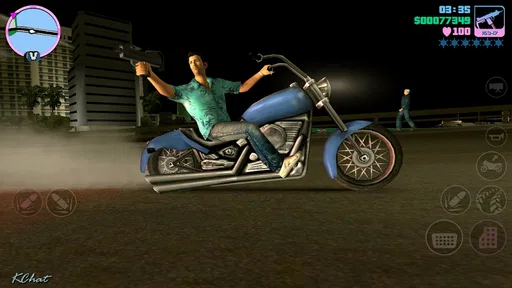
 Analysis by AppCompare
Grand Theft Auto: Vice City is one of those mobile games that can feel instantly familiar and surprisingly demanding at the same time. I spent time with it expecting a quick return to a classic open-world crime story, but what stayed with me was the contrast between its confident atmosphere and its occasionally awkward phone controls. Rockstar Games has brought its arcade-style action game to mobile for players who want to revisit Vice City on a modern device, and the result still has a strong personality even when its age shows.
The appeal is easy to understand. You get a large city to explore, a story built around criminal ambition, plenty of driving and shooting, and a bright 1980s setting that gives nearly every street a distinct mood. The game is aimed at a mature audience, with a Mature 17+ rating, so it is not a casual family adventure. It is better viewed as a portable version of a full console-style experience rather than a short-session arcade game.
After the novelty fades, though, the important question is whether it deserves regular space on your phone. My answer is yes for players who enjoy replaying story-driven open-world games and can tolerate touch controls. I would be more cautious for anyone looking for quick, polished sessions or a game designed around modern mobile habits.
Why the first week feels so compelling
The opening hours do most of the selling. Vice City has an unmistakable visual identity: palm-lined roads, colorful buildings, beaches, clubs, and a constant sense that the city is performing for you. Even when I was only driving between objectives, the setting gave ordinary movement a sense of occasion. That atmosphere is more memorable than the basic mission structure, and it is the main reason the game feels different from many anonymous mobile action titles.
The story also gives the early game a useful rhythm. Missions introduce new parts of the city while gradually making the player more comfortable with driving, combat, and movement. I liked that the world does not feel like a menu of disconnected activities. A job might begin with a simple trip, turn into a chase, and finish with a messy escape across several streets. That unpredictability makes the first sessions easy to extend: I would complete one objective, notice something nearby, and keep playing longer than planned.
Touchscreen controls are the first serious adjustment. Driving is usually easier to understand than on-foot combat because the movement has a clear direction and the vehicle gives you some physical protection. On foot, aiming, changing direction, and reacting to enemies can feel less natural than they would with a physical controller. I found myself paying more attention to positioning before a firefight, because rushing forward and trying to correct mistakes with touch input is not always reliable.
This is where a practical habit helps: I recommend taking a few minutes early on to adjust the control layout and sensitivity instead of accepting the default arrangement immediately. The best setup depends on the phone and the way you hold it, but moving important buttons away from areas covered by your thumbs can reduce accidental taps. The game becomes less frustrating when the interface feels shaped around your hands rather than the other way around.
Worth Reading Before You Choose

EA SPORTS FC Mobile 26 Is a Bigger Football Game, but It Takes Time

Flipboard Shows What News Apps Must Do Beyond the Feed

Switching to Android Auto Means Rethinking Your Driving Routine

Google Calendar Makes a Crowded Week Easier to Manage

Ludo King Makes the Most of the Minutes Between Plans

Baby Panda World Brings Quick Play to Modern Phones, but Its Game Library Feels Busy
The first week is also when the city feels largest. New players tend to treat every neighborhood as a discovery, and the mixture of roads, alleys, water, businesses, and mission locations encourages wandering. I enjoyed using free-roam time to learn shortcuts instead of relying only on the obvious route. That knowledge matters later, especially when a mission becomes more difficult because of traffic, pursuit, or a tight time limit.
What makes the mobile version more than a quick nostalgia trip
The strongest part of the experience is that it still asks you to learn the city. This is not simply a sequence of tiny levels that can be cleared while waiting in line. The map, mission locations, vehicles, and escape routes gradually become familiar, and that familiarity creates a sense of ownership. I began to recognize which streets were useful for avoiding trouble and which areas were likely to turn a simple getaway into a crash.
That makes it a good fit for a realistic evening scenario. If I have a free half hour, I can complete a mission or explore without needing to remember a complicated live-service schedule. If I have more time on a weekend, I can settle into a longer story session. The game supports both patterns, although its saving and mission structure reward a little planning rather than constant interruptions.
One useful approach is to treat the phone version as a focused game, not background entertainment. I get more from it when I silence distractions, use headphones if possible, and play while holding the device securely with both hands. The soundtrack, dialogue, and environmental noise are important to the sense of place, while one-handed play makes the controls much harder to manage.
The game is sold for $4.99, which changes how I judge it. I am not expecting an endless stream of seasonal content or a free-to-play progression loop. I am asking whether the initial purchase provides a substantial experience that I can return to. For players who already know they enjoy this style of Rockstar Games storytelling, the price is easier to justify than it is for someone who only wants a few minutes of action at a time.
Whether it keeps earning playtime after the first month
Long-term value comes mainly from the story, the open city, and the freedom to approach the game at your own pace. It does not depend on constant updates or a rotating set of rewards. That is a strength for me because the game feels stable and self-contained. I can return after a break without needing to catch up with a new system, a temporary event, or a changing competitive environment.
At the same time, this structure means the game’s value is front-loaded. Once the missions and activities become familiar, the reasons to return are personal rather than automatic. Some players will replay favorite sections, experiment with different routes, or simply enjoy driving around Vice City. Others will finish the main experience and move on. I think that is an honest trade-off: the game offers a complete adventure, but it is not designed to manufacture a daily habit forever.
The arcade classification is useful here, but it can also create the wrong expectation. This is not an arcade game in the sense of short rounds, instant restarts, and bite-sized score chasing. Its action is immediate, yet the overall experience is closer to a portable open-world campaign. If you want a game that fits neatly into two-minute gaps, a conventional mobile arcade title will probably serve you better.
Compared with other open-world crime games on phones, Vice City benefits from a clear identity and a strong sense of progression. It does not need to explain its appeal through endless customization or online competition. Compared with newer mobile action games, however, it can feel less accommodating. Modern alternatives often provide smoother onboarding, more forgiving interfaces, or sessions built specifically around touchscreens. I would choose this game for its setting and campaign, not because it is the most technically comfortable option available.
There is also value in its offline-style independence. I can focus on the world without worrying about other players, matchmaking, or a social obligation to keep returning. That makes it suitable for travel, quiet evenings, and situations where I want a complete game rather than a service. The downside is that there is no human unpredictability to refresh the experience once I have learned the missions and common situations.
Small habits that improve repeat sessions
I found that saving deliberately makes a noticeable difference. Before starting a longer mission, I prefer to make sure I am prepared rather than jumping straight into the next objective after a difficult sequence. This reduces the irritation of losing progress when a late mistake forces a repeat. It also makes the game easier to fit around real life, because I know I am beginning from a sensible point instead of an awkward interruption.
Another useful habit is to separate exploration from mission attempts. When I am learning the city, I drive around without rushing and notice landmarks, bridges, and alternate roads. When I am trying to complete an objective, I avoid unnecessary detours. Mixing both approaches during a difficult mission can lead to avoidable crashes or wasted time, particularly when I am still concentrating on the touch interface.
I also recommend changing the way you hold the phone depending on the activity. Driving can feel more manageable when the screen is stable and both thumbs remain available. On-foot combat demands even more control, so I avoid playing while walking or while the device is resting loosely in one hand. This sounds obvious, but many frustrations that feel like game difficulty are really grip and visibility problems.
The current version is 1.12.259, and the game requires at least iOS 9. Those details matter most for people using older devices or maintaining several phones. On a compatible device, I would still leave enough free attention for the interface and performance rather than assuming that an older game will automatically feel effortless. A game can be technically familiar while still demanding a comfortable screen, responsive input, and a stable grip.
Where fatigue begins to replace excitement
The biggest long-term weakness is repetition. Driving, shooting, escaping, and returning to familiar locations are enjoyable when the story gives them context, but the same actions can feel routine after many sessions. The city remains visually distinctive, yet the surprise of discovering it naturally declines. I noticed this especially when I returned after a long break and remembered that the atmosphere was stronger than my desire to repeat every task.
Touch controls add another layer of fatigue. A difficult mission is more satisfying when I fail because I made a bad decision. It is less satisfying when I fail because aiming, steering, or tapping a command did not feel precise enough. The phone version cannot fully reproduce the confidence of physical controls, and that limitation becomes more obvious during busy scenes with several threats or vehicles moving at once.
Players who dislike older game design may also find the experience demanding in ways that modern mobile releases avoid. The game expects patience, route learning, and repeated attempts. It does not always feel as if every system has been redesigned around instant clarity. That is part of the character for some players, but it is a real barrier for anyone accustomed to generous checkpoints and highly streamlined interfaces.
The Mature 17+ rating should be taken seriously. The tone is built around crime, violence, adult themes, and an aggressive world, so I would not recommend it for children or for shared family play where that content would be uncomfortable. The rating is not a minor label attached to a harmless driving game; it reflects the kind of story and situations the player will encounter.
The purchase model also deserves a close look. The game costs $4.99, and in-app purchases are listed at $4.99 per item. I would not approach it expecting a completely frictionless free download, and I would check the purchase screen carefully before confirming anything. For me, the sensible way to evaluate it is as a paid game first, with the additional purchase option treated cautiously rather than as part of the core reason to buy.
Its average rating is 3.3 from around 206 thousand ratings, with roughly 19 thousand written reviews. I read that as a sign that the game has a divided audience rather than a universally smooth mobile experience. The strong setting and established name attract players, while control issues, device differences, and older design choices can pull satisfaction down. The fact that it has passed one million installs shows broad interest, but popularity alone does not guarantee that it will suit your phone or your preferred way of playing.
Who should skip it
I would skip this release if your priority is a fast, low-commitment arcade game. It asks for attention, and its best moments depend on becoming comfortable with a world rather than grabbing a random thirty-second challenge. I would also look elsewhere if precise touchscreen combat is a deal-breaker or if you want frequent new content to keep the experience changing.
It may not be ideal for someone with very limited storage, a small screen, or an older device that makes the controls feel cramped. I would rather be honest about that than suggest that the famous setting solves every technical or ergonomic concern. Before buying, I would make sure the phone is supported, the screen gives both thumbs enough room, and the Mature 17+ content fits the intended player.
Players who want multiplayer competition should choose a different type of game as well. Vice City works best as a solitary campaign and a personal sandbox. Its appeal comes from the story, the city, and the freedom to make your own route through the experience, not from comparing performance with friends in real time.
My long-term verdict on keeping it installed
Grand Theft Auto: Vice City earns lasting space on my phone when I want a self-contained open-world adventure with a memorable setting. Its greatest strength is not simply that it is a famous game; it is that Vice City still feels like a place with a recognizable mood. The city encourages exploration, the missions create momentum, and the story gives the driving and shooting a reason to exist.
Its weaknesses are equally clear. The mobile controls can make demanding moments feel less fair, the mission patterns eventually become familiar, and the experience does not provide an endless reason to return after completion. The $4.99 price is reasonable for someone who wants a substantial campaign, but less attractive if you are unsure about touch controls or rarely finish long games. The extra $4.99-per-item purchase option is another reason to pay attention during checkout rather than tapping through automatically.
For me, the best use is as a deliberate return game: something I install when I want to revisit a complete story, explore at my own pace, or spend a quiet evening in a stylized open world. I would not keep it as my only mobile game, because it does not replace a quick arcade title, a competitive game, or a constantly refreshed service. It complements those games instead.
If you enjoy older open-world design and are willing to learn the touchscreen layout, I think it remains a worthwhile purchase. If you need modern controls, short sessions, or a steady stream of new content, the novelty is likely to fade before the game becomes a habit. My final recommendation is therefore specific: choose it for the atmosphere and the campaign, not merely for the name. When those are what you want, Vice City still has enough character to justify returning to its streets.
Pros
- Large open-world map with plenty of missions and side activities.
- Memorable 1980s setting
- colorful visuals
- and a strong crime-story atmosphere.
- Wide selection of cars
- motorcycles
- boats
- weapons
- and aircraft.
- Businesses and properties add extra goals beyond the main storyline.
- Touch controls support customization for different playing styles.
Cons
- Some missions feel frustrating because checkpoints and retries are limited.
- The mobile version may require considerable storage space and device performance.
- Older character animations and visuals can look dated on modern screens.
- Driving and aiming with touch controls may take time to master.
- The soundtrack may differ depending on licensing and regional availability.
FAQs for Grand Theft Auto: Vice City
What is Grand Theft Auto: Vice City about?
Grand Theft Auto: Vice City is an open-world action game set in a colorful 1980s-inspired city filled with beaches, nightclubs, businesses, and criminal organizations. You play as Tommy Vercetti, a gangster building his influence after a deal goes wrong. The game combines story missions, driving, shooting, exploration, property management, and plenty of optional activities in a large, freely explorable environment.
Can Grand Theft Auto: Vice City be played offline on Android or iOS?
Yes, the main single-player campaign can generally be played offline after the game has been properly installed and any required initial setup has been completed. An internet connection may still be needed to download the application, verify the purchase, install updates, or restore access through your app store account. Multiplayer is not part of the original mobile experience, so offline play is its main focus.
Is Grand Theft Auto: Vice City suitable for children?
Grand Theft Auto: Vice City is designed for mature players and is not generally suitable for children. It contains frequent violence, criminal themes, strong language, sexual references, drug-related content, and mature humor. The game also allows players to steal vehicles, use weapons, and participate in fictional criminal activities. Parents should review the official age rating and consider device restrictions before allowing access.
Does the mobile version include the complete Vice City experience?
The mobile release is based on the classic Grand Theft Auto: Vice City experience and includes the central storyline, major characters, missions, vehicles, weapons, exploration, and side activities familiar from the original game. However, mobile editions can differ slightly depending on the platform, update, device, and controller support. Checking the current store description is recommended for exact compatibility and feature information.
What devices and controls work best for Grand Theft Auto: Vice City?
Grand Theft Auto: Vice City requires a compatible Android or iOS device with enough free storage and an operating system supported by the current store listing. Performance is usually better on newer phones and tablets, especially during busy scenes or while driving quickly through the city. Touch controls are available, but a supported Bluetooth gamepad can make aiming, driving, and camera movement considerably more comfortable.


